Chinese New Year, also known as the Spring Festival, is a time of grand festivities, rich traditions, and heartfelt family reunions. Join us as we delve into the essence of Chinese New Year, from its ancient origins to modern-day celebrations, and discover how you can incorporate Del Monte products to make your festivities even more special.
What is Chinese New Year?
Chinese New Year, or Lunar New Year, is the most important traditional holiday in Chinese culture. It marks the beginning of the lunar calendar and symbolizes the end of winter and the arrival of spring. This festival is not only significant in China but also holds great importance in many East Asian countries, including Vietnam, South Korea, and Singapore. Celebrations typically last 15 days, beginning on the first day of the lunar calendar, which usually falls between January 21st and February 20th.
The History and Origins of Chinese New Year
The origins of Chinese New Year can be traced back over 4,000 years to the ancient agrarian society of China. Initially, it was a time to honor deities and ancestors at the end of the harvest season. The festival’s customs and traditions evolved significantly through various dynasties, with each period adding its own unique elements to the celebrations.
Legend of the Nian Monster
One of the most famous legends associated with Chinese New Year is the story of the Nian monster. According to folklore, Nian was a fearsome beast that would emerge from the mountains to attack villages on the eve of the new year. To protect themselves, villagers discovered that Nian was afraid of loud noises, bright lights, and the color red. This led to the customs of setting off firecrackers, displaying red decorations, and lighting lanterns, which are still practiced today.
Evolution Through Dynasties
Over time, the celebration of Chinese New Year underwent significant changes. During the Han Dynasty (206 BC – 220 AD), the festival became more elaborate with the introduction of firecrackers and the tradition of family reunions. The Tang Dynasty (618 – 907 AD) saw the incorporation of lion and dragon dances, while the Song Dynasty (960 – 1279 AD) popularized the use of red envelopes. Each dynasty contributed to the rich tapestry of customs that define Chinese New Year today.
Traditions and Celebrations
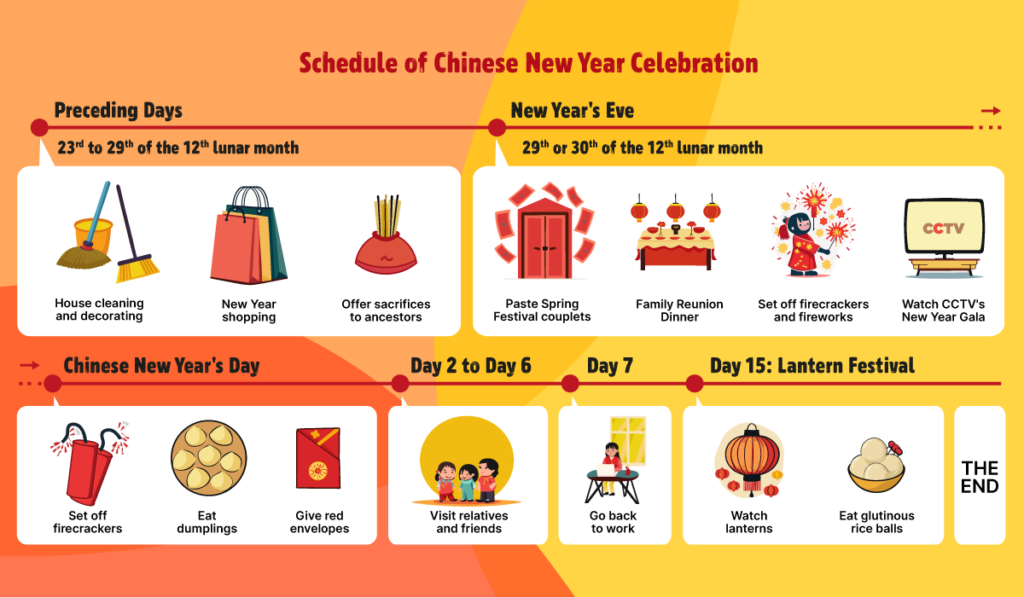
Chinese New Year celebrations are a blend of ancient customs and contemporary practices. The festivities typically last for 15 days, with each day having its own unique significance and set of activities.
Cleaning and Decorating Homes
In the days leading up to Chinese New Year, families engage in thorough cleaning of their homes to sweep away bad luck and make way for good fortune. This practice, known as “sweeping the dust,” symbolizes a fresh start. Houses are then decorated with red items such as lanterns, couplets, and paper cuttings to invite prosperity and happiness.
Each item carries its own significance, such as warding off evil spirits or inviting good fortune. These decorations create a festive and welcoming atmosphere.
Offering Sacrifices to Ancestors
Honoring ancestors is a vital aspect of Chinese New Year. Families prepare elaborate feasts and offer sacrifices at ancestral altars to show respect and gratitude. This ritual reinforces familial bonds and ensures that ancestors are remembered and revered.
Family Reunion Dinners
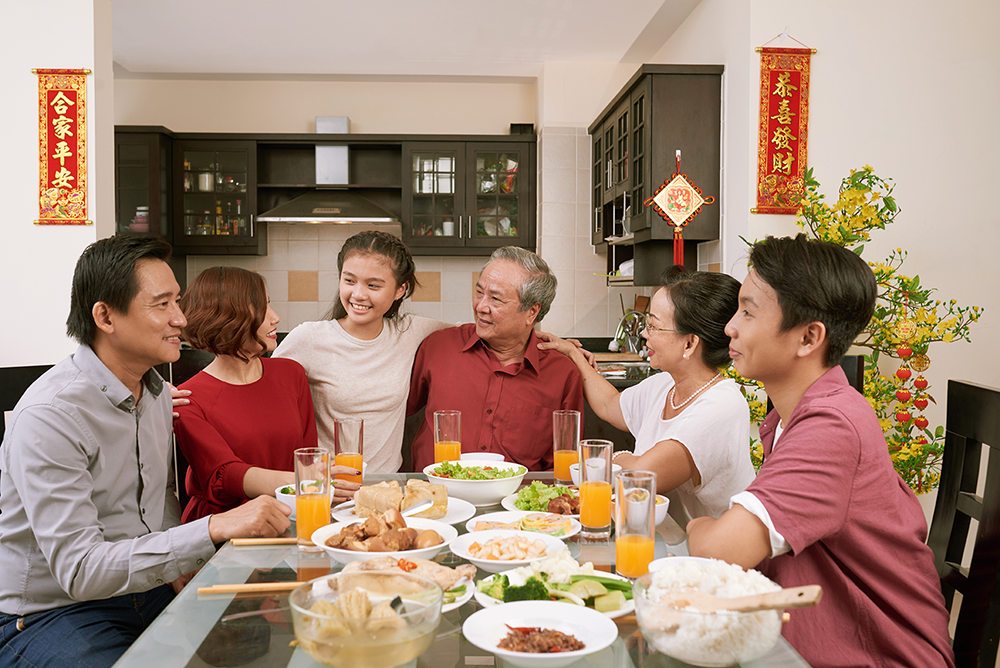
The reunion dinner on New Year’s Eve is the highlight of the festivities. It is a time for families to gather, enjoy a lavish meal, and celebrate their togetherness. Traditional dishes include dumplings, fish, rice cakes, and spring rolls, each symbolizing different blessings such as wealth, surplus, and unity.
Exchanging Red Envelopes
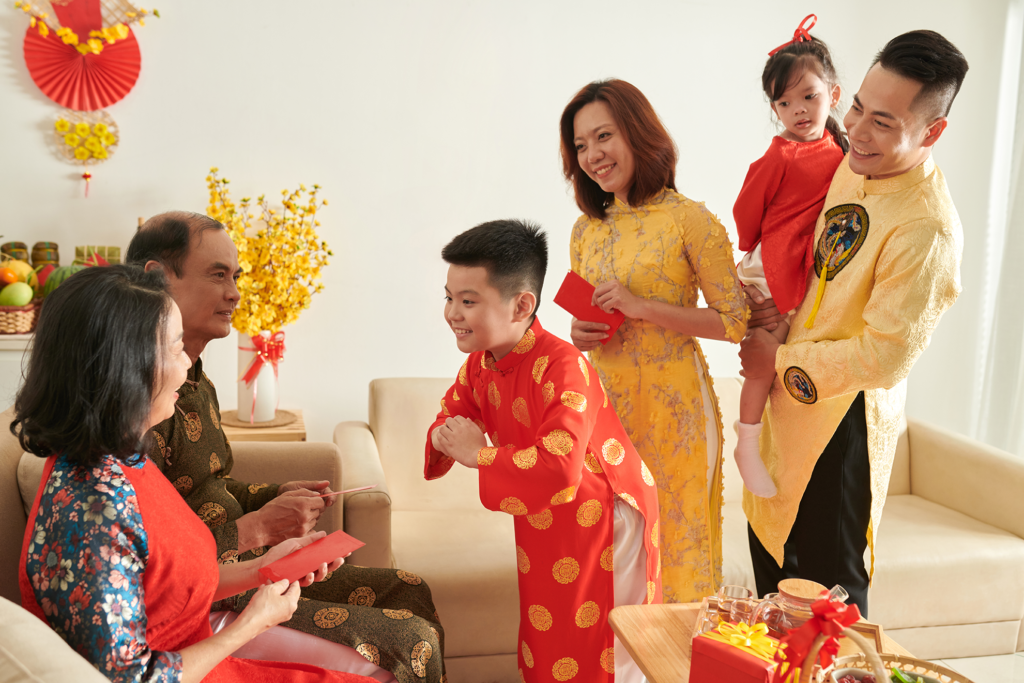
Red envelopes, or “hongbao,” filled with money are exchanged during Chinese New Year as a symbol of good luck and prosperity. These envelopes are typically given by elders to children and unmarried adults. The act of giving and receiving red envelopes strengthens relationships and fosters a sense of community.
Setting Off Firecrackers and Fireworks
Firecrackers and fireworks are an integral part of Chinese New Year celebrations. They are believed to ward off evil spirits and bring good luck. The loud explosions and bright lights create a festive atmosphere and signify the joy and excitement of the occasion.
Lion and Dragon Dances
Lion and dragon dances are spectacular performances that symbolize strength, courage, and good fortune. These dances are often performed in public spaces, attracting large crowds and adding to the festive spirit. The lion dance, in particular, is thought to drive away evil spirits and bring prosperity.
The Chinese Zodiac
The Chinese zodiac is a 12-year cycle, with each year represented by an animal. The zodiac animals are Rat, Ox, Tiger, Rabbit, Dragon, Snake, Horse, Goat, Monkey, Rooster, Dog, and Pig. Each animal has its own characteristics and symbolizes different aspects of life. In 2025, it will be the Year of the Snake, which is associated with wisdom, intuition, and transformation.
Chinese New Year Food
Symbolic Foods
Food plays a central role in Chinese New Year celebrations. Certain dishes are believed to bring good luck and prosperity. For example, fish represents surplus and abundance, while dumplings symbolize wealth. Rice cakes, known as “nian gao,” signify growth and progress. These foods are prepared with great care and enjoyed during family meals.
Importance of Food in Celebrations
Sharing food with family and friends is a fundamental part of Chinese New Year. It is a time to strengthen bonds and create lasting memories. Popular dishes include sweet rice balls (tangyuan), longevity noodles, and glutinous rice cakes. Each dish carries its own symbolic meaning, contributing to the festive atmosphere.
How to Celebrate Chinese New Year with Del Monte
Del Monte products can add a delightful twist to your Chinese New Year celebrations. Our range of juices, nectars, and cold drinks can be used to create refreshing beverages that complement festive meals. Incorporating these drinks into your celebrations can enhance the dining experience and bring a burst of flavor to the festivities.
Celebrations Around the World
Chinese New Year is celebrated with great enthusiasm in many countries around the world. Major cities like New York, London, and Sydney host vibrant parades and cultural events, attracting diverse crowds. These celebrations showcase the global significance of Chinese New Year and its ability to bring people together.
Lunar New Year, though not a nationwide public holiday in Canada, is marked with enthusiasm and vibrant celebrations that can last for many days. Festivities often include lively street parades, traditional dancing, dazzling firework displays, and bustling food stalls. Many Chinese Canadian families still keep it traditional by coming together to share gifts, especially red envelopes filled with money (Hong Bao, Ang Pao, or Lai See), a cherished tradition for children. Over the years, various Canadian organizations have also embraced Lunar New Year, hosting a range of cultural activities that highlight its significance and joy.
Local Traditions
While the core traditions of Chinese New Year remain consistent, different regions have their own unique customs. In Malaysia, for example, the tossing of “yee sang” (a raw fish salad) is a popular tradition, symbolizing prosperity and abundance. Understanding these local variations adds depth to the celebration.
Creating a Sense of Community
At Del Monte, we believe in the power of community and shared experiences. We encourage you to share your Chinese New Year celebrations on social media using Del Monte-themed hashtags. By connecting with others and showcasing your festive moments, you contribute to a vibrant and inclusive community that celebrates diversity and togetherness.
Chinese New Year is a time of joy, reflection, and renewal. From its ancient origins to contemporary celebrations, this festival embodies the essence of Chinese culture and its values. As you prepare to celebrate Chinese New Year 2025, consider incorporating Del Monte products into your festivities to create memorable and delicious moments. Explore the rich traditions, share the joy with loved ones, and embrace the sense of community that this special occasion brings. Happy Chinese New Year!